
The Cisco Certified Network Associate (CCNA) exam tests your knowledge across networking fundamentals, network access, IP connectivity, IP services, security fundamentals, and automation and programmability. It mixes multiple-choice questions with drag-and-drop items, simulations, and simlets, and it’s built to confirm you can install, configure, operate, and troubleshoot medium-sized routed and switched networks. For anyone heading into networking, passing it is a real milestone, and the IT industry treats it that way.
To get through it, you need a firm grip on networking concepts, protocols, and technologies. That means being comfortable with Ethernet, IP addressing, subnetting, routing protocols, switching, VLANs, ACLs, and NAT, and being able to configure and troubleshoot routers and switches. The exam also reaches into security fundamentals, covering security policies, device security, and wireless security, and it expects a basic feel for automation and programmability, including APIs and a little Python for network automation.
Key Takeaways
- The CCNA exam tests knowledge of networking fundamentals, network access, IP connectivity, IP services, security fundamentals, and automation and programmability.
- Study strategies for success include creating a study schedule, using multiple resources, and practicing hands-on lab exercises.
- Practical lab experience is essential for understanding networking concepts and gaining hands-on skills.
- Taking practice tests helps to assess knowledge and identify areas for improvement.
- Effective time management and exam day preparation are crucial for success, including reviewing exam topics, getting a good night’s sleep, and arriving early at the testing center.
- Resources for exam preparation include official Cisco study materials, online courses, and study groups.
- Staying motivated and focused involves setting goals, staying organized, and seeking support from peers and mentors.
Study Strategies for Success
The CCNA rewards a planned approach. A study plan that lists every topic and gives each one a time slot keeps you from leaving gaps, and pulling from a few different sources, textbooks, online courses, and video tutorials, lets you see the same idea explained more than one way, which helps it stick. Pair that reading with hands-on time on real equipment so the theory has something concrete to attach to.
Pace matters too. Regular breaks keep you fresh, and short, frequent sessions usually beat marathon ones. Work with the material actively rather than just reading it: summarize the key points, explain a concept to someone else, or talk it through in a study group. Then run sample questions and mock exams to get used to the format and find the spots that still need work.
Practical Lab Experience
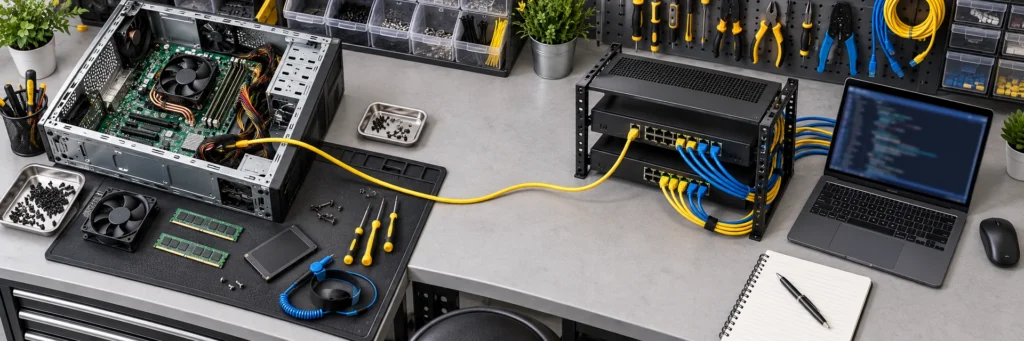
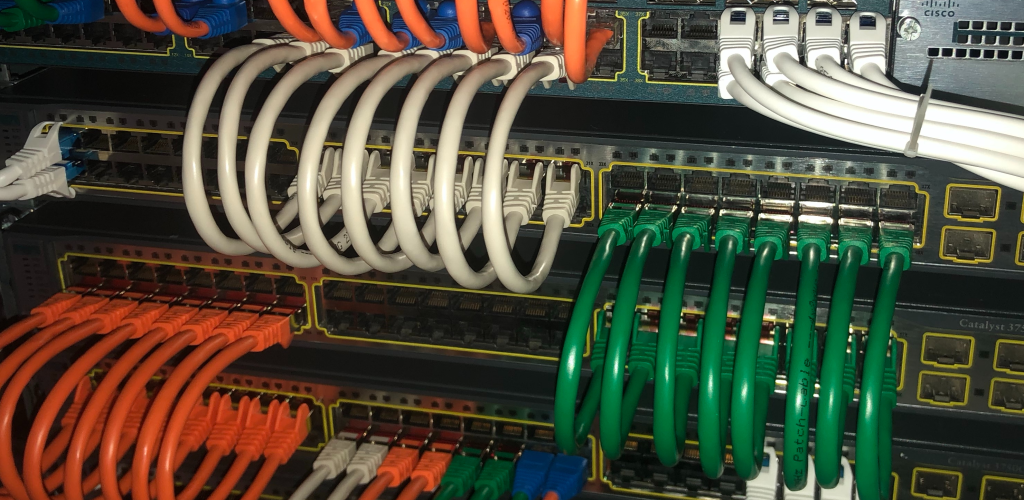
Lab time is where the CCNA is really won. Getting your hands on the equipment lets you turn theory into something you’ve actually done, and it cements how the concepts fit together. A home lab with a few routers, switches, and other devices gives you room to configure and troubleshoot, try out different topologies, and work through the kinds of scenarios the exam throws at you. That practice builds both skill and the confidence to use it.
If physical gear isn’t practical, virtual labs from online training providers or network simulation software do much the same job. They cost less and travel with you, and they let you experiment freely without any risk of knocking over a live network. Either way, hands-on practice is central to CCNA preparation and to the job that follows.
Taking Practice Tests
| Test Name | Number of Questions | Duration | Score Range |
|---|---|---|---|
| Practice Test 1 | 50 | 60 minutes | 0-100 |
| Practice Test 2 | 75 | 90 minutes | 0-150 |
| Practice Test 3 | 100 | 120 minutes | 0-200 |
Practice tests are the clearest read you’ll get on whether you’re ready. They mimic the real exam’s format and question types, so nothing on the day feels unfamiliar, and they track your progress as you go, which does a lot for your confidence heading in.
They also sharpen your timing. Put yourself on the clock and you learn to pace yourself so every question gets an answer inside the time limit. Just as important, going back over your results shows you exactly which topics are weak, so you can steer your remaining study toward the things that need it most.
Time Management and Exam Day Preparation
Managing your time well is half the battle before the exam. Give each objective enough room, and leave space for regular review and practice rather than saving it all for the end. A schedule with a slot for every topic keeps the coverage honest. Set goals you can realistically meet, and steer clear of cramming a mountain of material into a couple of nights.
On the day itself, get to the testing center early and bring the identification and any other documents you need. Show up rested and settled, because a clear head holds focus far better than a frazzled one. If nerves start to build, a few slow breaths or a moment of visualization can bring your concentration back.
Resources for Exam Preparation

Plenty of good material exists for CCNA prep. Official Cisco training courses cover the full range of exam topics, are taught by certified instructors with real networking experience, and usually build in hands-on labs. Cisco Press adds a set of study guides, practice tests, and self-study materials made specifically for the CCNA.
Online platforms such as CBT Nuggets, Pluralsight, and Udemy offer video courses across the exam objectives, and they let you study at your own pace from anywhere with a connection. On top of that, online forums and study groups are handy for comparing notes, swapping study tips, and getting a stubborn concept explained a different way.
Staying Motivated and Focused
Keeping your motivation up over weeks of study is its own challenge. Clear goals and milestones give you a sense of movement, and breaking the material into manageable chunks keeps the whole thing from feeling overwhelming. A small reward when you hit a milestone doesn’t hurt either.
Focus is the other half. Find a quiet spot, silence the notifications, and set fixed study times so your brain knows what the hours are for. Take regular breaks to head off mental fatigue, and use them well: a short walk or a few minutes of stretching clears your head and makes the next session sharper.
Put these pieces together, hands-on lab work, practice tests, careful time management, the right resources, and steady focus, and you give yourself a genuine shot at passing the CCNA and moving your networking career forward.
FAQs
What is the CCNA exam?
The CCNA (Cisco Certified Network Associate) exam is a certification exam offered by Cisco that tests the candidate’s knowledge and skills in networking fundamentals, network access, IP connectivity, IP services, security fundamentals, and automation and programmability.
What are the prerequisites for taking the CCNA exam?
There are no formal prerequisites for taking the CCNA exam, but it is recommended that candidates have a good understanding of networking fundamentals and basic IP addressing.
What topics are covered in the CCNA exam?
The CCNA exam covers a wide range of topics including network fundamentals, network access, IP connectivity, IP services, security fundamentals, and automation and programmability.
How can I prepare for the CCNA exam?
Candidates can prepare for the CCNA exam by taking Cisco-approved training courses, using study guides and practice exams, and gaining hands-on experience with networking equipment.
What is the format of the CCNA exam?
The CCNA exam is a computer-based test that consists of multiple-choice, drag-and-drop, and simulation questions. The duration of the exam is 90 minutes.
What is the passing score for the CCNA exam?
The passing score for the CCNA exam is set by Cisco and may vary. Candidates should check the Cisco website for the most up-to-date information on passing scores.

Senior Network Engineer | CCNP Enterprise | CCIE Candidate
Trave Hurd is a senior network engineer with over a decade of experience designing and managing enterprise Cisco environments. Holding multiple Cisco and industry certifications, he writes about the full arc of a networking career, from passing your first exam to building the skills that get you to the top of the field.