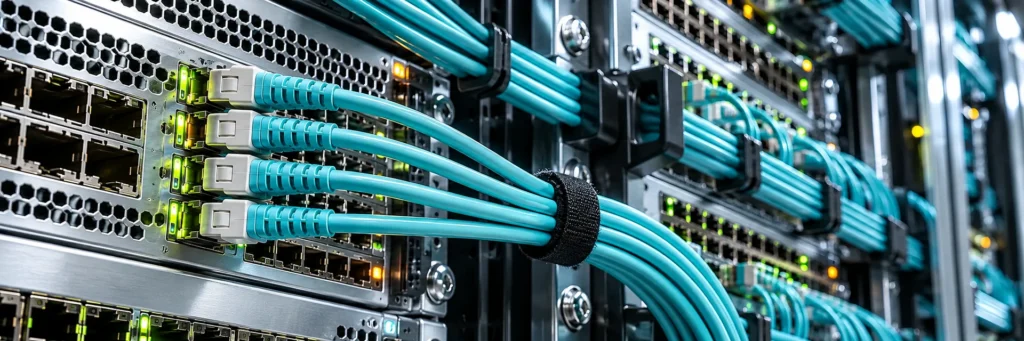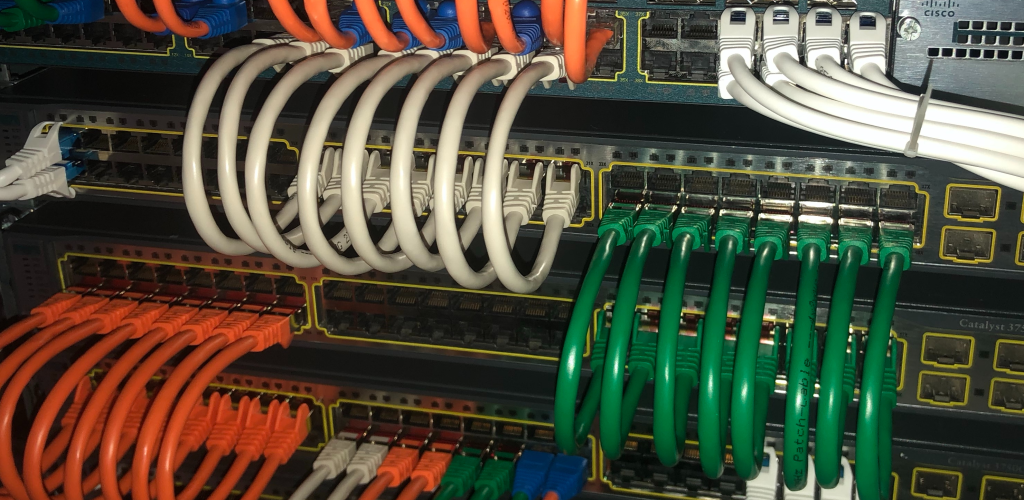

Cisco switches are core networking components that link several devices in a local area network (LAN). Based on MAC addresses, these switches forward data packets at the data link layer of the OSI model. Cisco provides a range of switch models with different port densities, speeds, and features to fit different network requirements. One of the main purposes of a switch is to reduce network congestion and improve performance by defining a separate collision domain for every port.
Key Takeaways
- Cisco switches are essential networking devices that connect multiple devices within a local area network (LAN) and enable communication between them.
- To optimize network speed and performance with Cisco switches, it is important to consider factors such as port speed, duplex settings, and network congestion.
- Implementing VLANs and trunking with Cisco switches allows for efficient network segmentation, improved security, and better traffic management.
- Quality of Service (QoS) can be utilized with Cisco switches to prioritize network traffic and ensure that critical applications receive the necessary bandwidth and resources.
- Cisco switches offer enhanced security and access control features such as port security, DHCP snooping, and dynamic ARP inspection to protect the network from unauthorized access and attacks.
- Monitoring and troubleshooting network performance with Cisco switches involves using tools such as SNMP, syslog, and port mirroring to identify and resolve network issues.
- Future trends and innovations in Cisco switch technology include advancements in software-defined networking (SDN), intent-based networking, and the integration of artificial intelligence for network automation and management.
This is done through store-and-forward switching, in which packets are buffered and checked before forwarding. Cisco switches support protocols such as Ethernet, VLAN, and Spanning Tree Protocol (STP) for dependable connectivity and effective traffic management. Power over Ethernet (PoE) is another useful feature, delivering power to connected devices like IP phones, wireless access points, and security cameras. By removing the need for separate power sources, this simplifies network deployment. These switches also include security features like port security, 802.1X authentication, and access control lists (ACLs) to protect the network from threats and unauthorized access.
High-speed data transfer and traffic control. Cisco switches support Gigabit Ethernet and 10 Gigabit Ethernet interfaces, giving enterprises high data transfer rates, lower latency, and better overall responsiveness. Features like Quality of Service (QoS) and link aggregation (EtherChannel) prioritize important traffic and keep mission-critical applications performing reliably.
Switching technologies for security and traffic control. Cisco switches support technologies like trunking and Virtual LANs (VLANs), which let organizations divide a network into several virtual networks for better traffic management and security. By logically separating departments or user groups within the same physical network, VLANs reduce broadcast traffic and improve security. Trunking aggregates several VLANs over a single link, which streamlines network architecture and lowers the number of physical connections needed.
| Metrics | Data |
|---|---|
| Switch Throughput | Up to 10/40/100 Gbps |
| Port Density | Up to 96 ports per switch |
| Power Efficiency | Up to 95% energy efficient |
| Latency | As low as 1 microsecond |
| Packet Buffer Memory | Up to 16GB per switch |
Network management and monitoring. Cisco switches work with platforms like Cisco Prime Infrastructure and Cisco DNA Center, which add monitoring and management capabilities. These platforms give administrators detailed visibility into network performance, so they can find and resolve bottlenecks, optimize resource allocation, and keep the user experience consistent. Used well, these tools let organizations manage their network infrastructure proactively.
Cisco switches support trunking and Virtual LANs (VLANs) for network segmentation that improves performance, security, and manageability. With VLANs, administrators can divide a single physical network into several virtual networks, each with its own broadcast domain. Separating departments or user groups this way lowers broadcast traffic and improves security. VLANs also simplify administration by grouping devices according to their function or location. A company can, for example, create distinct VLANs for its marketing, finance, and guest Wi-Fi networks so that each group stays isolated while sharing the same physical infrastructure. This speeds up troubleshooting and traffic management while improving security.
Trunking is another key feature, letting organizations combine several VLANs over a single link between switches. This supports communication between devices in different VLANs and reduces the number of physical connections a network design needs. Trunking protocols like IEEE 802.1Q and Cisco’s proprietary Inter-Switch Link (ISL) keep VLAN information intact as traffic passes through the trunk connection. Deploying VLANs and trunking gives organizations more flexible network design, simpler infrastructure management, and better security through segmentation. These features, along with scalability, effective traffic management, and strong security, are what a modern business network relies on.
Quality of Service (QoS) is a key feature of Cisco switches, letting networks prioritize traffic according to standards like user identity, application type, or service level agreements (SLAs). Even during heavy congestion, QoS makes sure vital applications get the bandwidth and latency they need to keep running. By applying QoS policies on their switches, companies can manage network resources and keep the experience consistent for mission-critical applications.
Cisco switches prioritize traffic types by importance and requirement through several QoS mechanisms, including classification, marking, queuing, and policing. Voice over IP (VoIP) traffic can be marked high priority to guarantee low latency and minimal packet loss, while bulk file transfers can be marked low priority so they don’t affect real-time applications. Cisco switches also provide queuing mechanisms like Class-Based Weighted Fair Queuing (CBWFQ) and Weighted Fair Queuing (WFQ) to distribute bandwidth fairly among traffic types according to their QoS markings.
QoS policies can also be based on IP precedence markings or Differentiated Services Code Point (DSCP) values, so organizations can prioritize traffic according to defined service levels. This granular control lets administrators tailor QoS policies to specific application requirements and business needs. Used together, these QoS capabilities improve network performance and user satisfaction while making sure critical applications get the resources they require.
Security should be a priority in any network, and Cisco switches offer a range of features to improve access control and defend against threats. Port security is one of the primary features. It lets administrators limit access to specific switch ports by MAC address or other criteria, which keeps unauthorized devices off the network and reduces the risk of malicious activity. Cisco switches also include access control lists (ACLs), which let businesses write detailed rules for filtering traffic by protocol, port numbers, or source and destination IP addresses. ACLs give a practical way to control traffic flow and enforce security policies to block unwanted access and attacks. Advanced ACL features like object groups and time-based ACLs support more flexible, dynamic access control policies.
802.1X authentication is another important security feature Cisco switches support. It restricts network access based on user identity. With 802.1X in place, organizations can require users or devices to authenticate before being granted access. This makes sure only authorized users or devices connect, based on predefined authentication policies. Together, these security features help organizations improve access control, defend against threats, and protect the integrity of their infrastructure. For protecting sensitive data and meeting industry regulations, Cisco switches provide the tools needed to put strong security measures in place.
Tracking network performance. Cisco switches offer detailed statistics on network traffic, errors, and utilization across switch ports. This visibility lets administrators spot bottlenecks or anomalies in network behavior and act before they cause problems.
Advanced tracking features. Platforms like Cisco Prime Infrastructure and Cisco DNA Center provide centralized visibility into the entire network infrastructure. They offer historical performance analysis, automated alerts for potential problems or anomalies, and real-time monitoring dashboards. With these tools, administrators can keep the user experience consistent across the network, find areas to improve, and understand performance trends.
Troubleshooting features. Cisco switches also provide troubleshooting features like packet capture and port mirroring (SPAN) for real-time traffic analysis. Port mirroring copies traffic from one or more switch ports to a monitoring port so it can be examined with network analyzers or other tools. Packet capture lets administrators record and examine individual packets for forensic and detailed troubleshooting. These monitoring and troubleshooting capabilities let organizations manage their infrastructure proactively, catch problems before they affect users, and keep performance steady across their Cisco switches. They are central to keeping a dependable, responsive network.
As technology advances, Cisco continues to develop its switch technology to meet the growing demands of modern networks. One major trend is the adoption of software-defined networking (SDN) principles to add programmability, automation, and flexibility to network management. By adopting SDN, Cisco switches can optimize resource allocation, simplify operations through centralized control and orchestration, and adjust dynamically to changing network requirements. Artificial intelligence (AI) and machine learning (ML) capabilities are also being integrated into Cisco switch technology to improve network intelligence and automation. Switches that use AI and ML algorithms can analyze large volumes of network data in real time, spot trends or abnormalities, and make decisions to improve efficiency or head off problems without human intervention. This lets organizations manage their infrastructure more effectively and keep the user experience consistent.
Cisco also plans to build advanced threat detection and mitigation features directly into switch hardware. Integrating capabilities like malware protection or intrusion detection and prevention systems (IDS/IPS) at the switch level gives organizations better threat visibility and faster response without sacrificing performance or complicating the network. Cisco switches remain a core part of modern networking, providing connectivity, performance optimization, security enforcement, and monitoring and troubleshooting. As businesses adopt cloud computing, IoT devices, and edge computing, Cisco keeps developing switch solutions to meet those needs and help organizations build flexible, secure, high-performing networks.
If you’re interested in learning more about Cisco switches, you may also want to check out this article on first hop redundancy protocol. This protocol helps keep networks reliable and minimizes downtime, which makes it an important part of Cisco switch configuration and management.
FAQs
What are Cisco switches?
Cisco switches are networking devices that connect multiple devices within a local area network (LAN). They use packet switching to forward data to its destination.
What are the benefits of using Cisco switches?
Cisco switches offer high performance, scalability, and security features. They also provide advanced management and monitoring capabilities, making them suitable for enterprise networks.
What types of Cisco switches are available?
Cisco offers a range of switches including fixed-configuration switches, modular switches, and stackable switches. They also have switches designed for specific purposes such as data center, campus, and branch networking.
How do Cisco switches differ from other networking devices?
Cisco switches are specifically designed to connect multiple devices within a LAN, whereas routers are used to connect different networks. Additionally, switches operate at the data link layer (Layer 2) of the OSI model, while routers operate at the network layer (Layer 3).
What are some key features to consider when choosing a Cisco switch?
When choosing a Cisco switch, it’s important to consider factors such as port density, power over Ethernet (PoE) support, switching capacity, and advanced features like VLAN support, Quality of Service (QoS), and security features.

Senior Network Engineer | CCNP Enterprise | CCIE Candidate
Trave Hurd is a senior network engineer with over a decade of experience designing and managing enterprise Cisco environments. Holding multiple Cisco and industry certifications, he writes about the full arc of a networking career, from passing your first exam to building the skills that get you to the top of the field.