The Cisco Certified Network Associate (CCNA) is one of the best-known certifications in networking. It’s an entry-level credential that confirms you can install, configure, operate, and troubleshoot medium-sized routed and switched networks, and it’s aimed at engineers early in their careers. Across its scope it touches a broad range of networking concepts and technologies.
Earning it means passing a single exam that spans network fundamentals, network access, IP connectivity, IP services, security fundamentals, and automation and programmability. The exam is designed to check your knowledge across those areas, and clearing it shows you can work with Cisco networking devices and the technologies that run on them.
Key Takeaways
- Cisco CCNA is a foundational certification for networking professionals, covering basic to advanced networking concepts and skills.
- Networking fundamentals include understanding the OSI model, TCP/IP protocols, and network topologies.
- Routing and switching essentials involve learning about routing protocols, VLANs, and network security.
- CCNA Security focuses on securing network devices, implementing security protocols, and managing network access.
- Advanced topics in CCNA cover virtualization, cloud computing, and network automation.
Exploring the Fundamentals of Networking
The fundamentals are the building blocks of any IT infrastructure, and they sit at the heart of the CCNA. They span the OSI model, TCP/IP protocols, Ethernet, wireless networking, and network topologies, and a career in networking really starts with getting comfortable with all of them.
The OSI model breaks a communication system into seven layers, each handling a specific job and serving the layer above while drawing on the one below. Knowing it well is what makes troubleshooting and network design manageable rather than guesswork.
TCP/IP protocols are the foundation of the internet, defining how devices connect and how data moves between them. You need a working knowledge of them to configure and troubleshoot anything on a network.
Ethernet is the technology that ties devices together on a local area network (LAN), covering the physical and data link layers and carrying data between devices on the same segment. It’s central to designing and building LANs.
Wireless networking has grown alongside the flood of mobile devices and the expectation of connectivity anywhere, so understanding it is part of designing and securing modern networks.
Network topologies describe how a network is laid out, how devices connect and how data flows between them, and knowing the common layouts helps you both design and troubleshoot an infrastructure.
Learning the Essentials of Routing and Switching
Routing and switching are the core of the CCNA. Routing moves data packets between different networks, while switching forwards them within the same network, and you can’t design or run an infrastructure without a firm handle on both.
Routing protocols work out the best path for a packet to travel from source to destination. There are several, including RIP, OSPF, EIGRP, and BGP, each with its own strengths and use cases, and knowing how they behave is what lets you configure and troubleshoot routers.
Switching forwards packets within a network using MAC addresses, and switches are what let you build a LAN by tying multiple devices together. It’s fundamental to designing and running local networks.
VLANs (Virtual Local Area Networks) carve a single physical LAN into several logical ones. They add security, manageability, and room to grow by keeping different groups of users’ traffic apart, which makes them a staple of network design.
Mastering Cisco CCNA Security
| Metrics | Data |
|---|---|
| Pass Rate | 85% |
| Exam Duration | 90 minutes |
| Number of Questions | 60 |
| Exam Code | 210-260 IINS |
CCNA Security is an advanced credential that confirms you can build a security infrastructure, spot threats and vulnerabilities, and shut them down. It covers a wide set of security topics: secure access, VPNs, secure routing and switching, Cisco firewall technologies, intrusion prevention systems (IPS), and content and endpoint security.
Secure access is about keeping unauthorized users away from sensitive information, using authentication, authorization, and accounting (AAA) services along with secure management protocols such as SSH and SNMPv3.
VPN (Virtual Private Network) technology creates protected connections between remote users and corporate networks over the internet, which is what makes safe remote access to company resources possible.
Secure routing and switching adds protections on routers and switches that fend off attacks such as spoofing, man-in-the-middle, and denial of service (DoS).
Cisco firewall technologies keep unauthorized traffic out and let only legitimate traffic through, and understanding them is central to building a secure network.
Intrusion prevention systems (IPS) watch network traffic for malicious activity or policy violations and can be set to drop or block bad traffic the moment it appears.
Content and endpoint security guards sensitive information from exposure, drawing on data loss prevention (DLP), encryption, and endpoint protection.
Advanced Topics in Cisco CCNA
Beyond the fundamentals, a few advanced topics are worth an engineer’s attention: quality of service (QoS), network automation, cloud computing, and virtualization.
Quality of service (QoS) is the set of techniques for managing network resources and giving some traffic priority over the rest, so time-sensitive applications like voice and video stay smooth while email and web browsing wait their turn.
Network automation uses software and scripts to configure, manage, and monitor devices, which cuts down on manual effort, reduces mistakes, and keeps configurations consistent across the network.
Cloud computing keeps growing as organizations shift applications and services off-premises, so knowing how to link on-premises networks to cloud services, and keep that link secure, has become part of the job.
Virtualization creates virtual versions of physical resources such as servers, storage, and networking gear, which makes better use of hardware, trims costs, and gives you more flexibility to roll out new services.
Practical Application and Hands-On Training

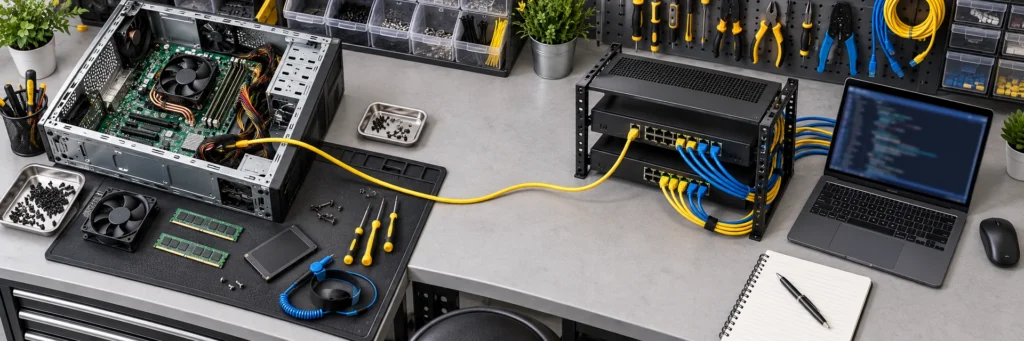
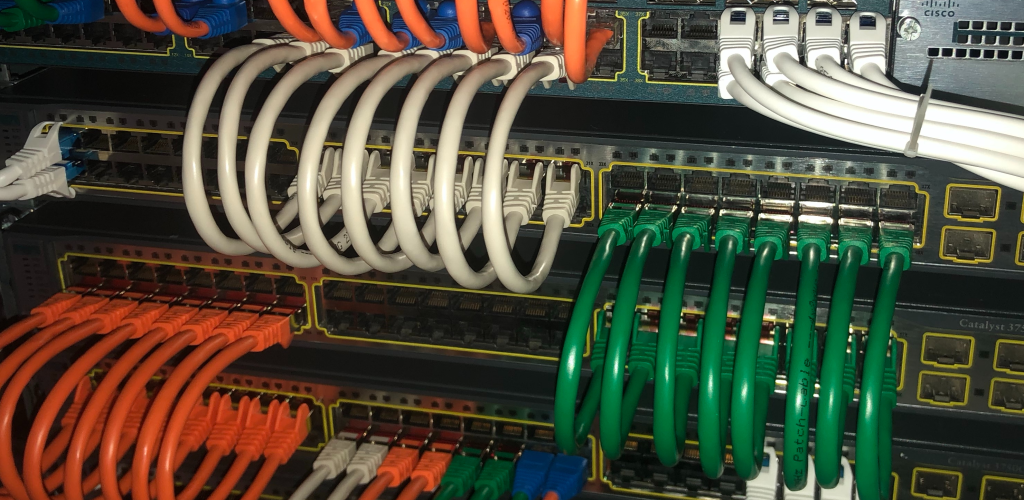
Hands-on training is what turns CCNA theory into ability. Real time with Cisco routers, switches, firewalls, and access points is how you build the skills to design, implement, and troubleshoot a network.
A lab full of Cisco devices lets you practice the technologies you’ll be tested on, VLANs, routing protocols, VPNs, and security features, until working with the equipment feels natural and the real-world scenarios stop being intimidating.
If you can’t get physical gear, simulation tools let you practice the same configurations in a virtual environment, safely and cheaply.
Practical work also means applying the concepts to real situations: troubleshooting a fault, designing a network to meet a specific need, or slotting a new technology into an existing setup.
Exam Preparation and Certification Tips
Getting ready for the CCNA takes a structured plan and a commitment to the objectives. Start by reading through Cisco’s exam topics so you know exactly where to focus.
Official Cisco learning materials, books, e-learning courses, and instructor-led training, are built by Cisco’s own experts and cover everything the exam tests, so they’re a dependable place to build your understanding.
Sample exam questions let you gauge where you stand and pick out the areas that need more work, and there are plenty of online practice exams and quizzes to draw on.
A study group or online forum gives you people to talk topics through with, swap resources, and get advice from those who’ve already passed.
On exam day, arrive early, bring valid identification, and settle in so you can work through the questions without distraction.
Clearing the CCNA rests on the same pillars throughout: the fundamentals, routing and switching, security, the advanced topics, real hands-on practice, and a preparation plan you actually follow. Get those in place and you’ll have shown you can work with Cisco technologies and be ready to take the next step in networking.
FAQs
What is Cisco CCNA training?
Cisco CCNA (Cisco Certified Network Associate) training is a certification program offered by Cisco Systems that validates the ability to install, configure, operate, and troubleshoot medium-size routed and switched networks.
What are the benefits of Cisco CCNA training?
Cisco CCNA training provides individuals with the knowledge and skills to work with networking technologies, including routing, switching, and security. It also enhances career prospects and can lead to higher-paying job opportunities in the IT industry.
What topics are covered in Cisco CCNA training?
Cisco CCNA training covers a wide range of topics, including network fundamentals, network access, IP connectivity, IP services, security fundamentals, automation, and programmability.
How long does it take to complete Cisco CCNA training?
The duration of Cisco CCNA training can vary depending on the training provider and the individual’s learning pace. Typically, it can take anywhere from a few weeks to a few months to complete the training.
Is there a certification exam for Cisco CCNA training?
Yes, after completing the training, individuals can take the Cisco CCNA certification exam to become officially certified. The exam tests the individual’s knowledge and skills in networking technologies.
What are the career opportunities after completing Cisco CCNA training?
After completing Cisco CCNA training and obtaining the certification, individuals can pursue various career opportunities in the IT industry, including network administrator, network engineer, and systems administrator roles.

Senior Network Engineer | CCNP Enterprise | CCIE Candidate
Trave Hurd is a senior network engineer with over a decade of experience designing and managing enterprise Cisco environments. Holding multiple Cisco and industry certifications, he writes about the full arc of a networking career, from passing your first exam to building the skills that get you to the top of the field.